Resources & Information
What Should Housing Providers Check Before Commissioning Insulation Upgrades?
Before commissioning insulation upgrades across a housing stock, providers need to understand what is already in place, where the condition of existing insulation may have changed and which properties need further investigation.
This is becoming increasingly important for housing associations and local authorities as new energy efficiency requirements for social housing come into effect. From 1 April 2030, social homes in England will need to meet EPC C or higher against at least one of the reformed EPC metrics, with a second metric required by 2039. Providers will be able to choose the metrics that best suit their housing stock.
Insulation is one of the improvements highlighted by government to help homes stay warmer and lose less heat. For providers planning future upgrades, knowing the condition of existing insulation can help show where further work may be needed.
Start With the Information You Already Have
Housing providers will usually have a significant amount of information about their properties already. EPC records can show how homes are currently rated and existing property information can help identify previous insulation work or recurring issues.
This information can highlight properties that may need further investigation, but it does not always give a complete picture of the insulation already in place.
An EPC may show that insulation is present, without giving much detail about its current condition. Previous insulation work may also have taken place many years ago, so the condition of the property may have changed since then.
Looking at the information already available can help show which properties may need a closer look.
Is an EPC Enough to Plan Insulation Work?
An EPC can provide a useful starting point, but it is not a substitute for looking at the property itself.
The government is also reforming EPCs, with the Home Energy Model being developed as part of these changes. The reformed system is intended to provide a broader picture of how a home uses energy, including areas such as the building fabric and heating system.
For housing providers planning insulation upgrades, this information can help when deciding which properties need further investigation. If the condition of existing insulation needs to be established, though, further assessment of the properties may still be needed.
This can be particularly relevant where insulation is old, damaged or may need further investigation.
Looking More Closely at Existing Insulation
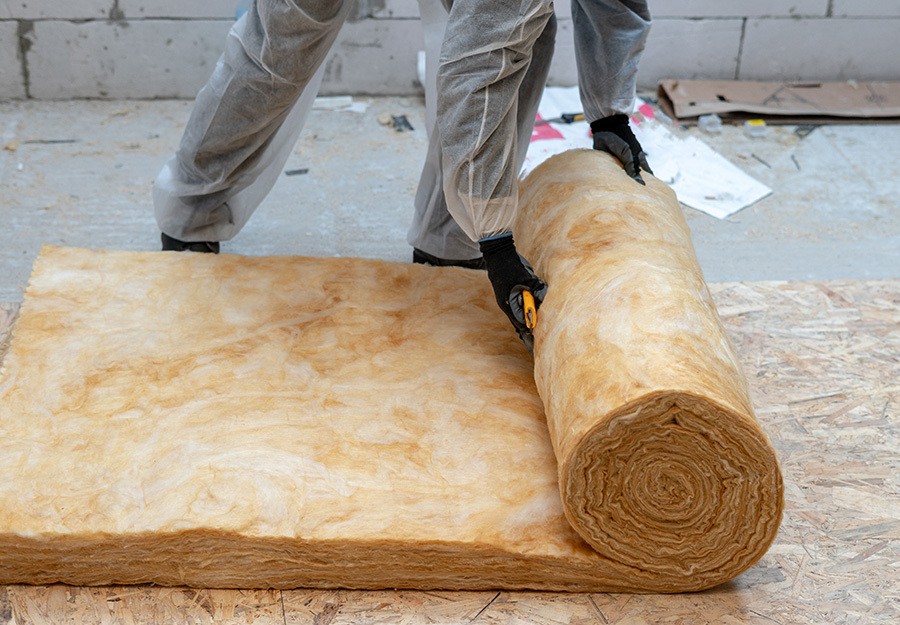
Once a property has been identified for further investigation, the next question is what insulation is there. A loft insulation survey can assess the insulation already in place, the condition of the loft space and ventilation, helping to establish if any work may be needed.
Cavity wall insulation needs a different assessment. Existing insulation may not always be suitable, and in some cases, it may need to be removed before the cavity is refilled. Understanding the condition of the existing insulation gives providers a clearer basis for deciding what work may be needed.
For a larger housing stock, this also means individual properties can be assessed on their own condition, instead of assuming the same work is needed across every home.
Where Can Thermal Imaging Help?
Thermal imaging can provide another source of information when investigating a property.
A thermal camera shows temperature differences across surfaces, which can highlight areas that may need a closer look. For example, unusual temperature patterns around a wall or ceiling could prompt further investigation of the insulation in that area.
Thermal imaging cannot confirm exactly what is causing a temperature difference, and it does not replace an insulation survey. It can, however, show areas that may need a closer look. For providers looking at a large number of properties, this can provide additional information when deciding which homes or areas may need closer investigation.
What Should Providers Look for in an Insulation Contractor?
The contractor's accreditation, pre-installation checks and approach to working in occupied homes are all worth considering when planning insulation work across a housing stock.
For government-funded programmes such as the Warm Homes: Social Housing Fund, PAS 2035:2023, relevant PAS 2030 certification and TrustMark registration are important requirements to check. It is also worth asking how properties are assessed before work begins. IPGL's pre-installation audits look for issues such as damp, structural defects and blocked ventilation. Cavity inspections can also identify failed insulation or debris before new insulation is installed.
Resident communication also needs to be considered where work is taking place in occupied homes. IPGL's installers receive resident liaison training, alongside training in areas including asbestos awareness and working at height.
Social value can also form part of a wider housing programme. IPGL supports local employment and apprenticeships in the areas where its teams operate.
Planning Insulation Work Across Your Housing Portfolio
Once providers have a clearer picture of the existing insulation across their properties, they can start to identify where further work may be needed and what that work should involve.
Ignite Property Group supports retrofit programmes across Hampshire, Berkshire, Wiltshire, Surrey and Dorset, with services including loft insulation, cavity wall insulation, cavity extraction and refill, and commercial thermal imaging surveys.
If you are reviewing your housing portfolio and need to understand where insulation work may be required, speak to Ignite Property Group about your requirements.
Related
High-Capacity Retrofit and Insulation Delivery Across the South
An operational overview of our commercial delivery capabilities, including our supply chain role on the Bromford Housing scheme and our direct-delivery partnership with Winchester City Council.
Read More
Infrastructure and High-Capacity Retrofit Delivery
Mobilisation-ready retrofit across Hampshire, Berkshire and London. IPGL’s Euro 6 fleet and 60-mile operational radius ensure high time-on-tool efficiency.
Read More